What is a postal code, and how are Nepal's postal codes built?
A postal code is a short number that tells the post which area a letter or parcel is going to. Nepal's new postal codes, introduced in 2025, have 5 digits for each local level (palika) and 7 digits for each ward. The first digit is the province, the next two are the district, the next two are the palika, and the last two are the ward.
What is a postal code?
A postal code is a number added to an address so that mail can be sorted by area. Instead of reading every street and village name, the post can look at the code and know which part of the country the item belongs to.
Different countries use different names for the same thing. In the United States it is a ZIP code, in India a PIN code, and in the United Kingdom a postcode. When a form asks for any of these for an address in Nepal, it wants the Nepal postal code.
You usually need one when you fill in a shipping address, shop online, or complete a form that has a separate postal code field, including many international forms.
Nepal's old and new postal codes
Nepal first used 5-digit postal codes from 1991. Those codes belonged to post offices. For example, the old code for Kathmandu was 44600.
Federalism reorganized Nepal into 7 provinces, 77 districts, and 753 local levels, and each local level is divided into wards. Because the old codes belonged to post offices, they do not line up one to one with the new local levels. In 2025, Nepal Post moved to new codes that follow the same structure as the country itself: province, district, local level, and ward.
The old codes are retired, but many international forms still accept them. This site shows an old code only when we are certain which palika it belongs to. The Sources page explains how old codes are matched.
How a Nepal postal code is built
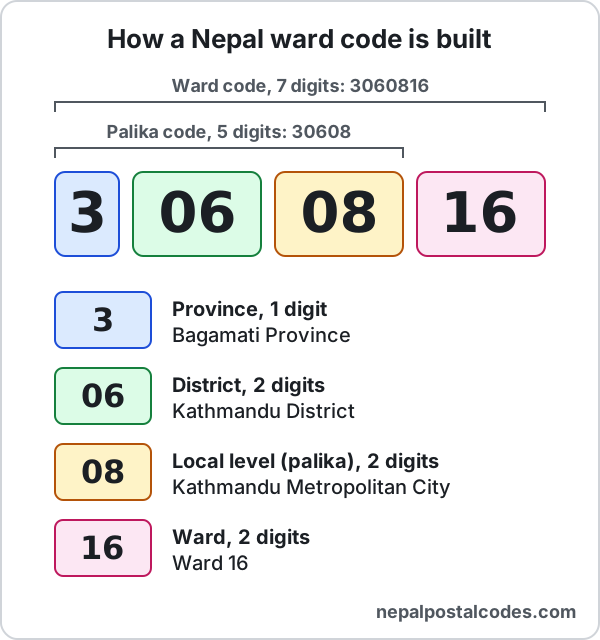
Take 3060816, the code for Ward 16 of Kathmandu Metropolitan City. Read it from left to right, and each part narrows the area down:
| Digits | Part | In this example |
|---|---|---|
| 3 | Province, 1 digit | Bagamati Province |
| 06 | District, 2 digits | Kathmandu District |
| 08 | Local level (palika), 2 digits | Kathmandu Metropolitan City |
| 16 | Ward, 2 digits | Ward 16 |
- Province (1 digit). 3 is Bagamati Province. Nepal has 7 provinces, and their codes start with 1 to 7.
- District (2 digits). 06 is Kathmandu District within the province. The number only has meaning together with the province digit in front of it.
- Local level (2 digits). 08 is Kathmandu Metropolitan City within the district. Together, the first five digits make the palika code, 30608.
- Ward (2 digits). 16 is the ward number. Ward 1 is 01, so single-digit wards always have a zero in front. Add it to the palika code and you get the 7-digit ward code, 3060816.
Another example: Pokhara Metropolitan City is 40504. It starts with 4 because it is in a different province.
From province to ward, digit by digit
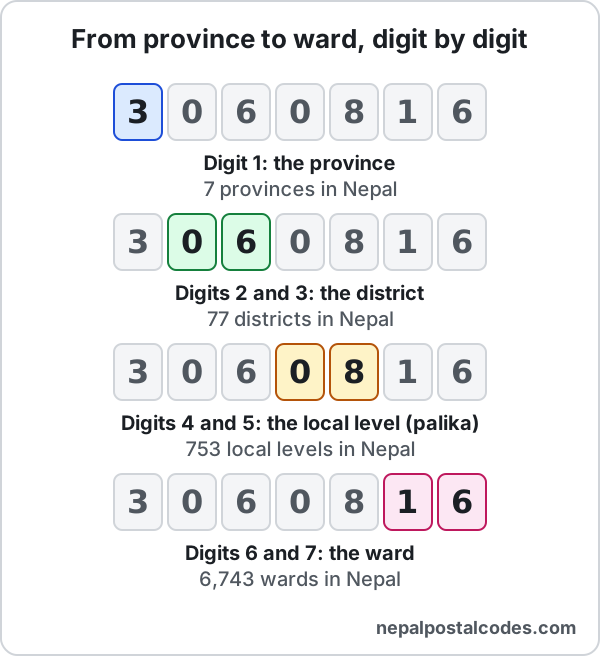
Each extra pair of digits takes you one level down, from a whole province to a single ward. The numbers below are the totals on this site, taken from the official list.
The first digit of each province
Every postal code in a province starts with the same digit:
| First digit | Province |
|---|---|
| 1 | Koshi Province |
| 2 | Madhesh Province |
| 3 | Bagamati Province |
| 4 | Gandaki Province |
| 5 | Lumbini Province |
| 6 | Karnali Province |
| 7 | Sudurpashchim Province |
Palika code or ward code: which one do I use?
Every local level has a 5-digit palika code, and it fits any standard 5-digit postal code field. The 7-digit ward code adds your ward number, for when you want to be more specific and the form or sender accepts 7 digits. If you are not sure of your ward, use the palika code, or ask your ward office.
How to find your code
- Search for your palika, city, or neighborhood on the home page.
- Or browse down from your province to your district and then your palika.
- Each palika page lists the 7-digit code of every ward, with a copy button for each.
- Cannot find your neighborhood or tole? Ask us which code covers it. We never guess, so we add a place only once a recorded source confirms where it is.
Common questions
Is a Nepal postal code the same as a ZIP code or PIN code?
Yes. ZIP code, PIN code, postcode, and postal code all name the same field on a form. For an address in Nepal, enter the Nepal postal code.
Does every street or tole have its own postal code?
No. The smallest unit with its own code is the ward. Every street, tole, and neighborhood in a ward shares that ward's code.
Can I still use the old code?
The old codes from 1991 are retired, but many international forms still accept them. The new code is the current one.
Where do the codes on this site come from?
From the official list published by the Department of Postal Services. The Sources and method page explains how we read and check it.